|
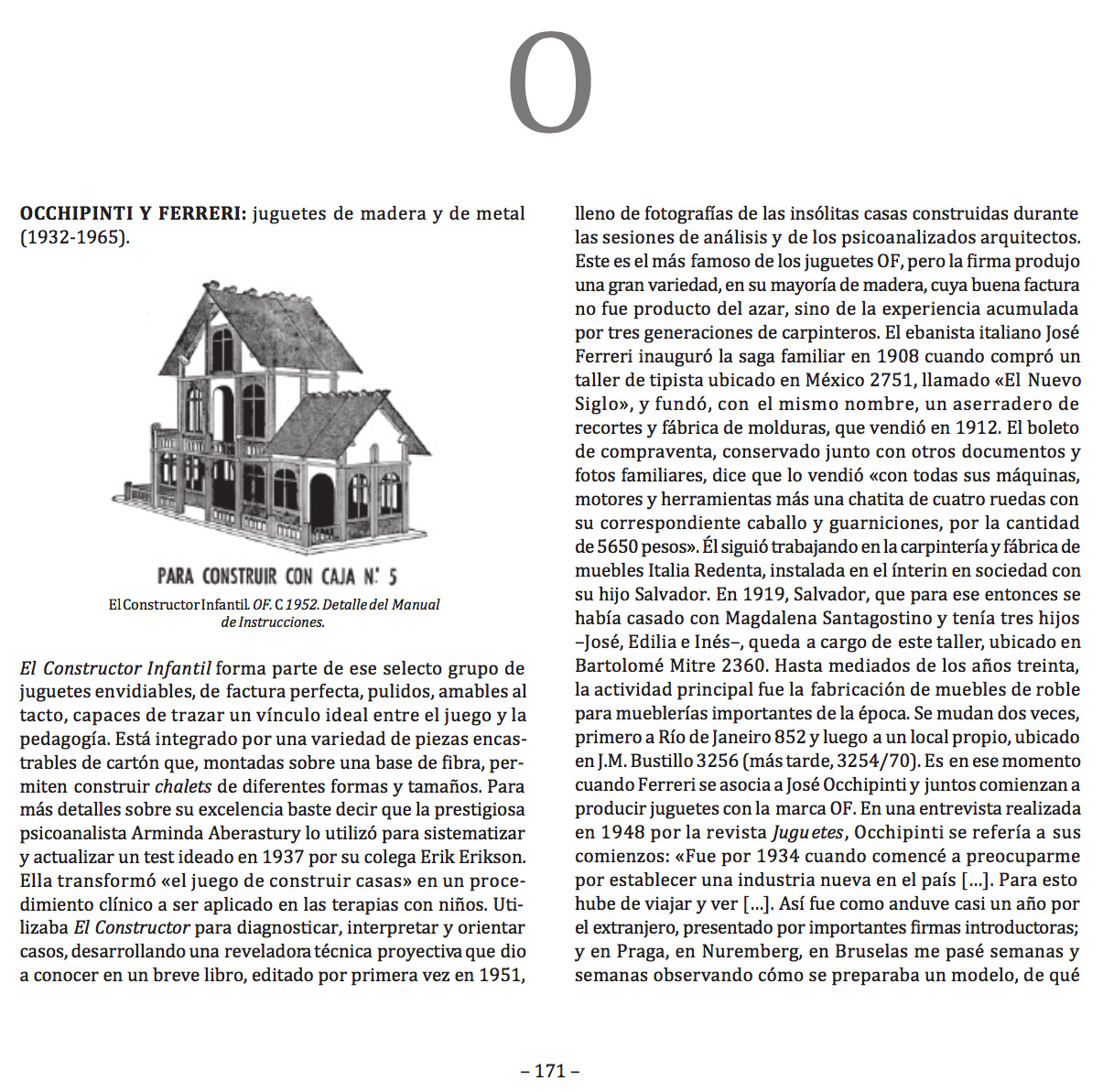
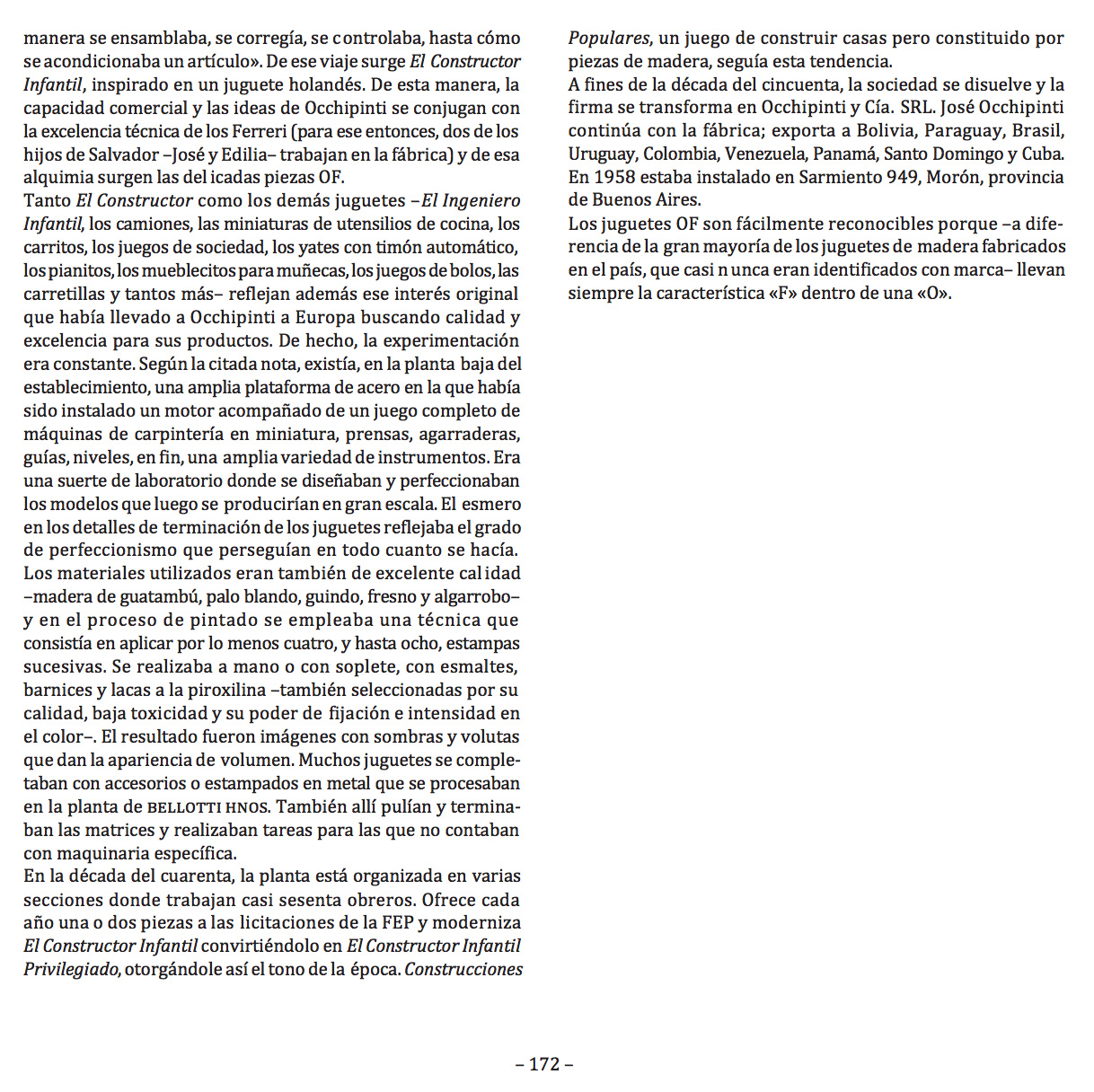
In her book Diccionario de
Juguetes Argentinos
(Dictionary of Argentine Toys, p.
171 & 172, see images below), Daniele Pelegrinelli
writes about El Constructor
Infantil. I include it here in its entirety
for those interested in more detail about Occhipinti
& Ferreri.
The original Spanish text is further below,
here an English translation:
[El
Constructor Infantil] is part of that
select group of enviable toys, perfectly
made, polished, kind to the touch, capable
of drawing an ideal link between play and
pedagogy. It is made up of a variety of
cardboard plug-in pieces that, mounted on
a fiber base, allow the construction of
chalets of different shapes and sizes.
For more details on
her excellence, suffice it to say that the
prestigious psychoanalyst Arminda
Aberastury used it to
systematize and update a test devised in
1937 by her colleague Erik Erikson. She
transformed "the game of building houses"
into a clinical procedure to be applied in
therapy with children. She used El
Constructor to diagnose, interpret and
guide cases, developing a revealing
projective technique that she made known
in a short book, published for the first
time in 1951, full of photographs of the
unusual houses built during the analysis
sessions and of the psychoanalyzed
architects.
This is the most
famous of the Occhipinti &
Ferreri
toys, but the firm produced a wide
variety, mostly made of wood, the good
workmanship of which was not the product
of chance, but of the experience
accumulated by three generations of
carpenters. The Italian cabinetmaker José
Ferreri started the family saga in 1908
when he bought a typical workshop located
in Mexico 2751, called "El Nuevo Siglo",
and founded, with the same name, a sawmill
for trimmings and moldings, which he sold
in 1912.
The sales slip,
preserved along with other documents and
family photos, says that he sold it "with
all its machines, engines and tools, plus
a small four-wheel drive with its
corresponding horse and trimmings, for the
amount of 5,650 pesos." He continued
working in the Italia Redenta carpentry
and furniture factory, installed in the
meantime in partnership with his son
Salvador.
In 1919, Salvador, who
by that time had married Magdalena
Santagostino and had three children –José,
Edilia and Inés–, was in charge of this
workshop, located at Bartolomé Miter 2360.
Until the mid-1930s, the main activity was
the manufacture of oak furniture for
important furniture stores of the time.
They moved twice, first to Rio de Janeiro
852 and then to their own premises,
located at J.M. Bustillo 3256 (later
3254/70).
It is at that moment
when Ferreri is associated with José
Occhipinti and together they begin to
produce toys with the OF brand. In an
interview conducted in 1948 by Toys
magazine, Occhipinti referred to its
beginnings: «It was around 1934 when I
began to worry about establishing a new
industry in the country […]. For this I
had to travel and see […]. This is how I
spent almost a year abroad, presented by
important introductory firms; and in
Prague, in Nuremberg, in Brussels I spent
weeks and weeks observing how a model was
prepared, how it was assembled, corrected,
controlled, even how an article was
packaged ».
From that trip comes El Constructor
Infantil, inspired by a Dutch toy.
In this way, the commercial capacity and
the ideas of Occhipinti are combined with
the technical excellence of the Ferreri
(at that time, two of Salvador's children
–José and Edilia– worked in the factory)
and from that alchemy the delicate pieces
emerge
OF. Both The Builder and the other toys -
The Child Engineer, trucks, miniature
kitchen utensils, trolleys, party games,
yachts with automatic steering, pianitos,
furniture for dolls, bowling games,
forklifts and many more – also reflect
that original interest that had led
Occhipinti to Europe seeking quality and
excellence for its products.
In fact, the experimentation was constant.
According to the aforementioned note,
there was, on the ground floor of the
establishment, a wide steel platform on
which a motor had been installed,
accompanied by a complete set of miniature
carpentry machines, presses, handles,
guides, levels, in short, a wide variety
of instruments. It was a kind of
laboratory where models that would later
be produced on a large scale were designed
and perfected.
The attention to detail in the finishing
details of the toys reflected the degree
of perfectionism they pursued in
everything that was made. The materials
used were also of excellent quality -
guatambú wood, softwood, cherry, ash and
carob - and a technique was used in the
painting process that consisted of
applying at least four, and up to eight,
successive prints. It was done by hand or
with a blowtorch, with enamels, varnishes
and pyroxylin lacquers - also selected for
their quality, low toxicity and their
fixing power and intensity in color. The
result was images with shadows and scrolls
that give the appearance of volume.
Many toys were completed with accessories
or metal stampings that were processed at
the BELLOTTI HNOS plant. Also there they
polished and finished the dies and carried
out tasks for which they did not have
specific machinery. In the 1940s, the
plant was organized into several sections
where almost sixty workers work.
Each year it offers one or two pieces to
the FEP tenders and modernizes El
Constructor Infantil turning it into El
Constructor Infantil Privilegiado, thus
giving it the tone of the time.
Construcciones Populares, a house-building
game made up of pieces of wood, followed
this trend.
At the end of the 1950s, the company
dissolved and the firm became Occhipinti y
Cía. SRL. José Occhipinti continues with
the factory; he exports to Bolivia,
Paraguay, Brazil, Uruguay, Colombia,
Venezuela, Panama, Santo Domingo and Cuba.
In 1958 he was installed in Sarmiento 949,
Morón, province of Buenos Aires. Occhipinti
& Ferreri
toys are easily recognizable because -
unlike the vast majority of wooden toys
manufactured in the country, which were
almost never identified with a brand -
they always carry the characteristic "F"
within an "O”.
|
|
|
Below the original text. If
there is an error in the translation, please let
me know!
|
|
ARMINDA
ABERASTURY
Although this is quite a departure from the theme
of this website, I thought it is quite interesting
that Mobaco, in the guise of El Constructor
Infantil, was used as a tool to help people rather
than just as a toy.
Born in 1910 in
Buenos Aires, Arminda Aberastury
married a pioneer of
psychoanalysis in Argentina. She
was active both as a therapist and
as a teacher, and focused on child
psychoanalysis. She published 145
books and articles. She committed
suicide in 1972, having been
afflicted with a disfiguring skin
disease. This biography
tells more about her
life.
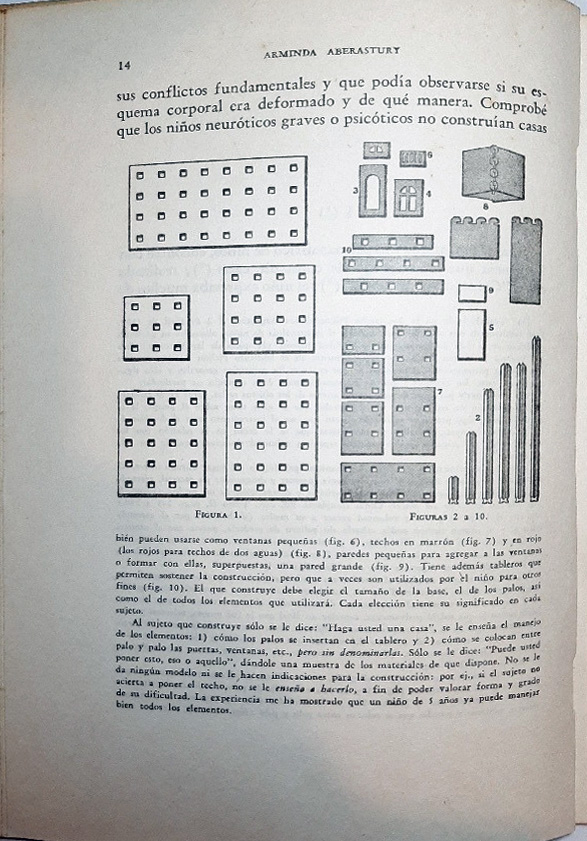
As described in
the The
Dictionary of
Argentine Toys,
Arminda Aberastury used El
Constructor
Infantil to
systematize
and update a
test devised
in 1937 by her
colleague Erik
Erikson. She
transformed
"the game of
building
houses" into a
clinical
procedure to
be applied in
therapy with
children. She
used El
Constructor to
diagnose,
interpret and
guide cases,
developing a
revealing
projective
technique that
she made known
in a short
book,
published for
the first time
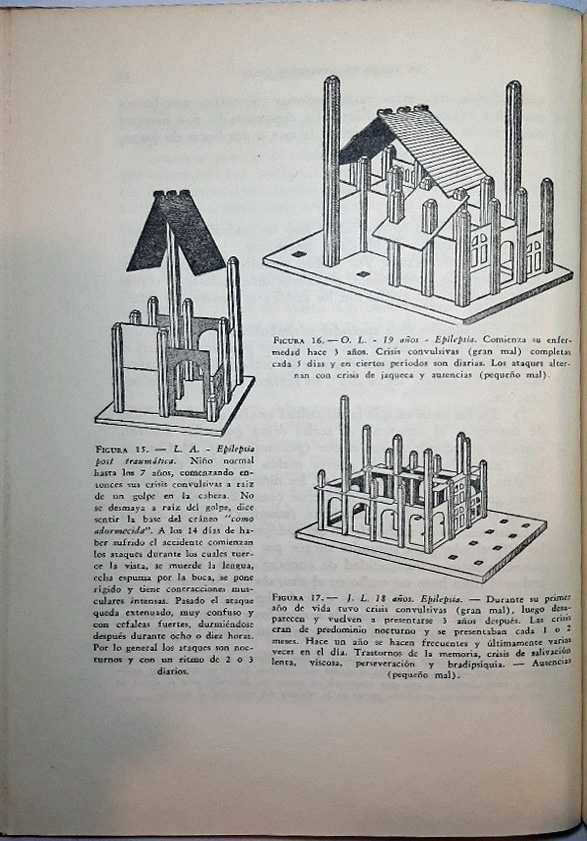
in 1951, full
of photographs
of the unusual
houses built
during the
analysis
sessions.
I found that she wrote two
books on this subject: El Juego de
Construir Casas (The House
Building Game) and El
Niño Y Sus Juegos (The Child and his
Games).
The books are readily available in Argentina
on the second hand site Mercado Libre.
Here some images of the first book, found on
Mercado Libre:
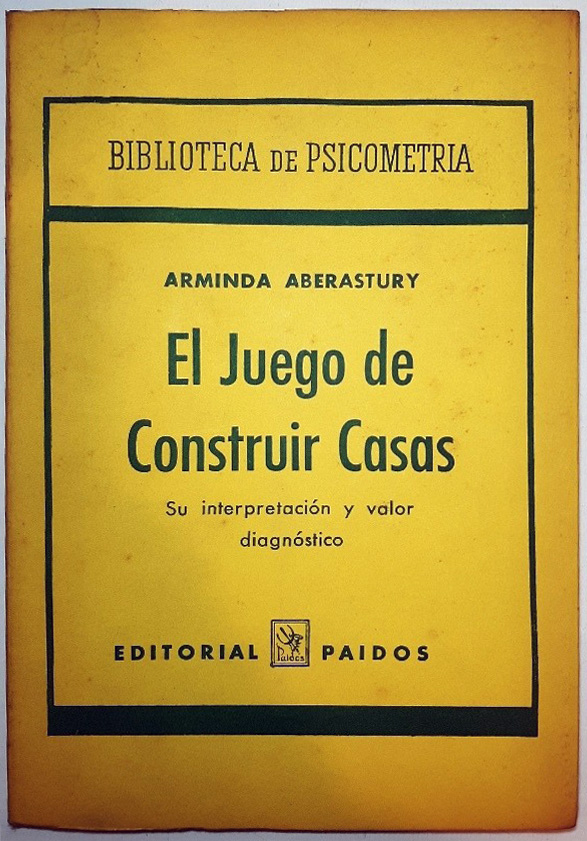
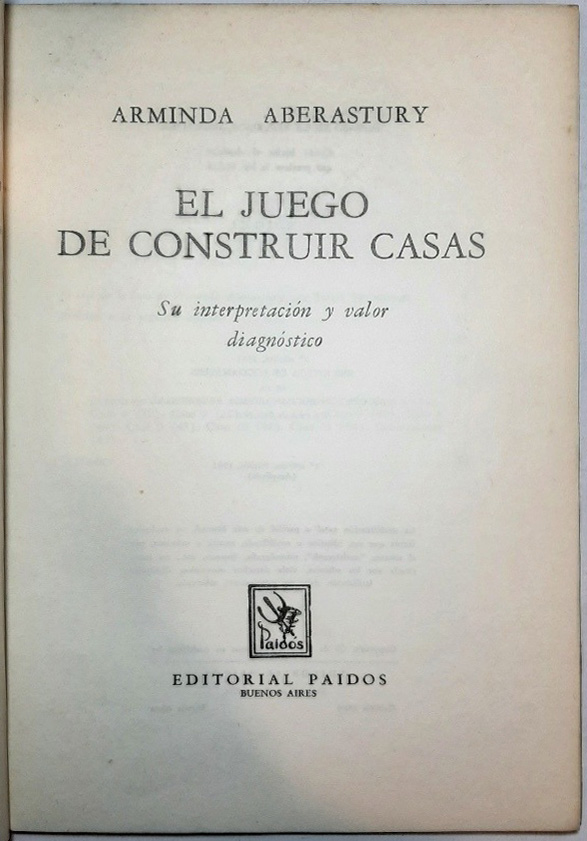
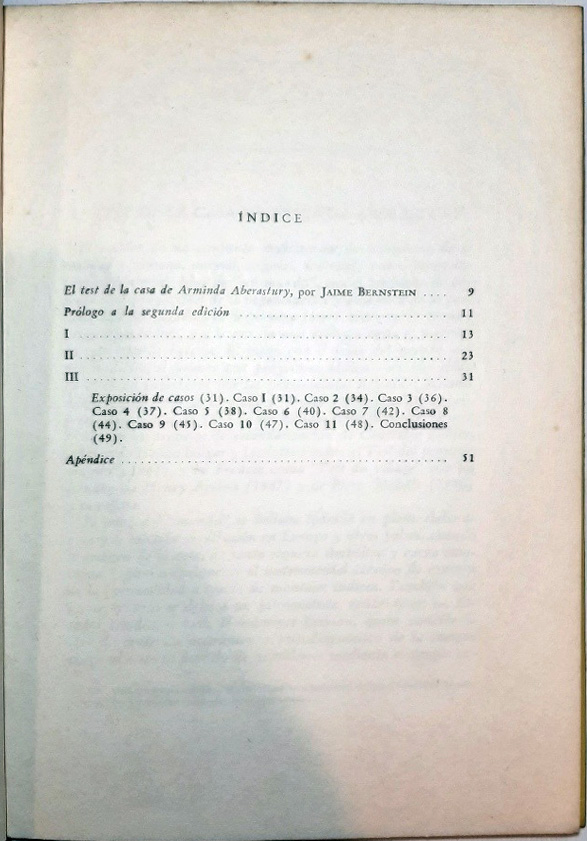
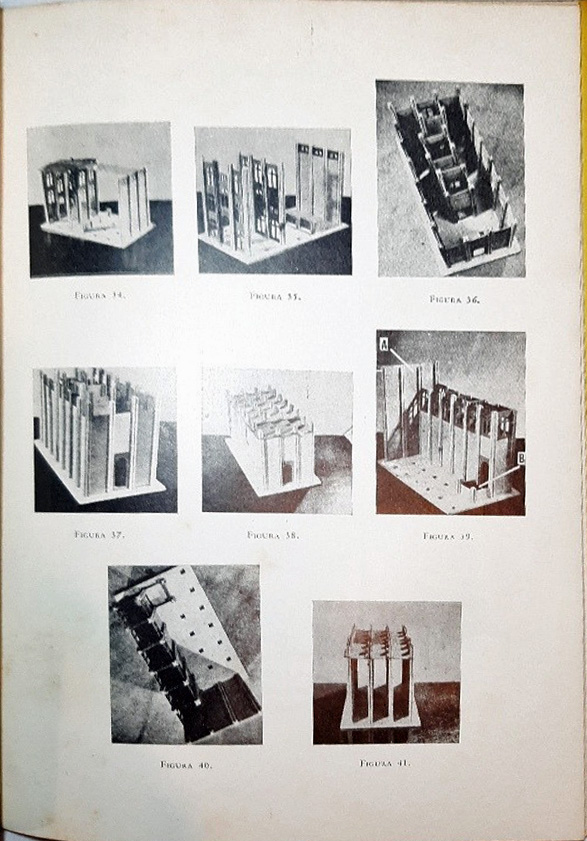
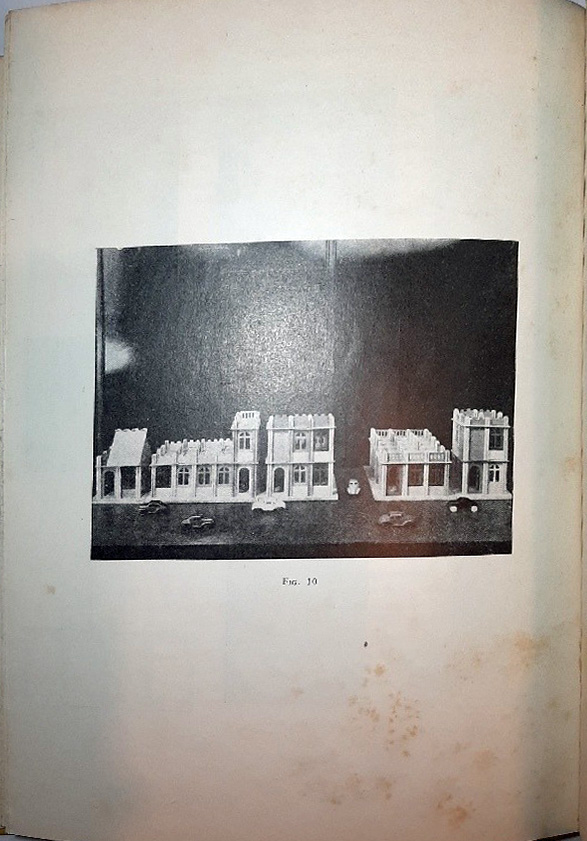
 Images courtesy of Mercado
Libre |
|
|